




Select NOAA-NWS Forecast Office Text Products

(Product availability varies with seasons, forecast office, and weather.)

Forecast Discussion for Indianapolis, IN

To Select Another NWS Office Click on Map or Choose from List
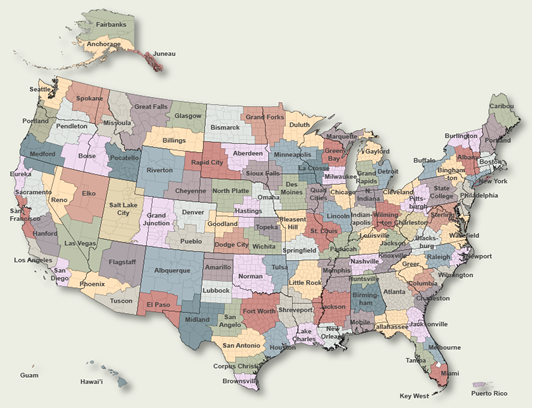
County Warning Area MAP
Select Forecast Office:   Select Product:  
913
FXUS63 KIND 170208
AFDIND

Area Forecast Discussion
National Weather Service Indianapolis IN
1008 PM EDT Tue Jun 16 2026

.KEY MESSAGES...

- Severe weather is likely most areas Wednesday with one round of
  marginally severe storms in the afternoon and more widespread
  severe weather towards the evening and early overnight

- Below normal temperatures will continue for much of the period

&&

.FORECAST UPDATE...
Issued at 1007 PM EDT Tue Jun 16 2026

Overall trend of convection is diminishing as heating is lost and
instability weakens. Will still keep the Severe Thunderstorm Watch
going for a bit though as the storms in the southern forecast area
are still pulsing up at times.

Adjusted PoPs to account for current radar trends, but expect
coverage to gradually lower into the early overnight with continuing
loss of instability.

Forecast low temperatures look reasonable so made no changes.

&&

.DISCUSSION (This evening through Tuesday)...
Issued at 152 PM EDT Tue Jun 16 2026

Overview.

Central Indiana will experience an active weather pattern through
Thursday morning, characterized by multiple rounds of thunderstorms
and a threat for severe weather. A slight risk for severe storms
exists this evening, followed by a more significant and widespread
threat on Wednesday. Primary hazards include damaging winds, large
hail, and isolated tornadoes. Outside of thunderstorms, gradient
winds will be gusty on Wednesday afternoon and evening. Following a
cold frontal passage on Thursday morning, precipitation will
terminate from north to south. A cooler and drier airmass will
settle over the region Friday and persist through the weekend,
bringing below-normal temperatures and dry conditions.

Rest of Today Through Thursday.

The synoptic pattern across the Upper Midwest and Ohio Valley is
characterized by a deep mid-level trough propagating into the Great
Lakes region. Central Indiana resides on the southeastern flank of
this feature within an area of strengthening southwesterly low-level
flow. Surface analysis indicates a surface low tracking through the
western Great Lakes, dragging a trailing cold front across the Upper
Mississippi Valley. Ahead of this boundary, a low-level jet is
driving modest moisture return into the local area. For this evening
and tonight, large-scale ascent and differential cyclonic vorticity
advection ahead of a weak embedded shortwave will generate scattered
to broken convective line segments migrating from west to east.
Model soundings indicate that while boundary-layer moisture recovery
is limited, steep mid-level lapse rates and a corridor of MLCAPE up
to 1000 J/kg will overlap with 35 to 40 knots of effective bulk
shear. This environment will support a semi-discrete to multicell
convective mode. Given the linear forcing and straight low-level
hodographs, the primary threat through midnight will be damaging
wind gusts and hail, with the highest probability concentrated
across the northern third of the forecast area where large-scale
forcing is maximized. The tornado threat will be greater towards
northern Indiana, but with SRH values of 100-150 m^2/s^2 quick spin-
ups will be possible. Convective coverage will decrease overnight
due to nocturnal stabilization and the departure of the shortwave.

Wednesday introduces a more significant severe weather threat as a
secondary, intense shortwave trough pivots around the parent low,
inducing rapid surface cyclogenesis across the Midwest. Model
consensus and ensemble guidance indicate this intensifying system
will push a surface warm front northward into central Indiana during
the late morning and early afternoon hours. This boundary will serve
as the focus for an initial thunderstorm complex or Mesoscale
Convective System (MCS). Strong deep-layer shear and a rapidly
destabilizing airmass will allow this initial complex to possess
severe capabilities, particularly along and north of the warm front
where low-level helicity will be maximized. Damaging straight-line
winds and isolated tornadic segments are the primary threats with
this initial wave.

High-resolution guidance indicates a brief period of diminished
precipitation behind the initial complex, allowing for boundary-
layer recovery. Intense low-level wind fields and an intensifying 50-
plus knot low-level jet will maintain strong theta-e advection,
causing instability to recover as surface dew points rise. By
Wednesday evening and into the overnight hours, a powerful secondary
round of convection is projected to develop along and ahead of the
main advancing cold front. The kinematic environment during this
period is anomalously strong, characterized by a 500 mb jet
exceeding 60 to 70 knots and elongated, curved low-level hodographs.
Deep-layer shear vectors perpendicular to the frontal boundary will
favor an initially discrete supercellular storm mode before
transitioning into a forward-propagating linear system. All severe
hazards remain possible. The tornado threat will be maximized near
the remnant warm front or older outflow boundaries across northern
portions of the forecast area, though strong background shear
maintains a risk statewide. Supercells across the north will also
carry a risk for large hail, while upscale linear growth late
Wednesday night will transition the primary hazard to widespread
damaging straight-line winds. Additionally, the tight synoptic
pressure gradient associated with the deepening low will produce non-
convective ambient wind gusts up to 40 mph from Wednesday afternoon
through Wednesday evening.

By Thursday morning, the primary surface low will move into the
eastern Great Lakes, driving the main cold front across the southern
portions of central Indiana. The front may linger across the
southern tier of counties to maintain a low probability of residual
showers and an isolated embedded thunderstorm through midday
Thursday. However, strong cold air advection and deep cyclonic
northwest flow aloft will overspread the remainder of the area. Post-
frontal subsidence and dry air entrainment will rapidly lower
precipitable water values and clear skies from north to south.
Temperatures on Thursday will reflect this post-frontal regime, with
cold air advection limiting daytime highs to the upper 60s and lower
70s Fahrenheit, establishing a below-normal thermal trend that will
persist into the upcoming weekend.

Friday through Tuesday...

The upper pattern through this period suggests below normal
temperatures with occasional shower and storm chances. Models
suggest a WNW flow aloft on Friday. This will persist through
Tuesday, blocking any strong heat intrusions from the south. Within
this quick flow aloft, several short waves area expected to pass
from time to time.

Weak waves looks to pass across the Great Lakes on Friday and
Saturday, however best forcing looks to remain north of Central
Indiana, and strong high pressure is suggested to remain at the
surface, creating a less favorable situation for precipitation.

The best chances for rain will be on Sunday into Monday as better
ingredients come together. On Sunday, another upper wave is expected
to pass, but this time, a warm front will be approaching from the
southwest, allowing more moisture to arrive on Southerly winds. A
surface area of low pressure is expected to cross Indiana on Sunday
night into Monday. Thus, shower and storm chances will be included
with these features present.

Eventually, dry and cool weather will return on Tuesday. This will
be due to the departure of the surface low and the arrival of high
pressure building across Indiana from the northern plains.

&&

.AVIATION (00Z TAF Issuance)...
Issued at 817 PM EDT Tue Jun 16 2026

Impacts:

- Active weather expected this TAF period.

- Isolated showers and thunderstorms through this evening. More
storms Wednesday afternoon through the overnight hours.

Discussion:

VFR conditions will be in play for most of the period, however two
upper level passing waves will help to generate showers and
thunderstorms, some with severe potential. A few showers and
thunderstorms are tracking SE across central Indiana, starting with
some impact initially for IND and HUF. This first wave should pass
by a little after midnight.

After dry weather overnight, an MCS over the upper midwest will
propagate toward Indiana tomorrow morning. These storms could arrive
in our far NW as early as late morning but higher confidence for
storms as we get into the afternoon. Severe storms will also be
possible tomorrow mainly during the afternoon into the early
overnight hours. Lightning will be likely, but damaging winds and
hail can`t be ruled out at TAF sites. Lowered clouds and vis also a
concern for stronger storms.


&&

.IND WATCHES/WARNINGS/ADVISORIES...
None.
&&

$$

UPDATE...50
AVIATION...KF
DISCUSSION...White/Puma

Previous Forecast Discussions may be found at
NWS Indianapolis, IN (IND) Office Forecast Discussions.
(Click 'Previous Version' there to view past versions successively.
Some may differ only in time posted.)

San Juan, PRHonolulu, HI Lake Charles, LA Pueblo, CO Corpus Christi, TX St. Louis, MO Reno, NV Raleigh, NC  Newport/Morehead City, NC Dodge City, KS Houston/Galveston, TX San Joaquin Valley/Hanford, CA Louisville, KY Fort Worth, TX Pittsburgh, PA Austin/San Antonio, TX Sacramento, CA Jackson, MS Phoenix, AZ Northern Indiana, IN Flagstaff, AZ Tallahassee, FL Springfield, MO Riverton, WY Blacksburg, VA Sioux Falls, SD El Paso Area, NM Columbia, SC Wilmington, NC Greenville-Spartanburg, SC Eureka, CA Midland/Odessa, TX Tucson, AZ Goodland, KS Huntsville, AL Amarillo, TX Norman, OK Lubbock, TX Marquette, MI Little Rock, AR Pendleton, OR Missoula, MT Binghamton, NY Boston, MA Green Bay, WI Billings, MT Baltimore/Washington San Diego, CA Tampa Bay, FL Morristown, TN Twin Cities, MN Brownsville, TX Portland, OR Des Moines, IA Memphis, TN Pocatello, ID San Angelo, TX Jacksonville, FL Aberdeen, SD Quad Cities, IA/IL Charleston, SC New Orleans/Baton Rouge, LA Peachtree City, GA Shreveport, LA Grand Rapids, MI Medford, OR Albany, NY Wichita, KS Gray/Portland, ME Spokane, WA Boise, ID Denver/Boulder, CO Great Falls, MT Caribou, ME Key West, FL Miami-South Florida, FL New York City/Upton, NY Melbourne, FL Hastings, NE Paducah, KY Glasgow, MT Bismarck, ND Charleston WV Omaha/Valley, NE Buffalo, NY Jackson, KY Kansas City/Pleasant Hill, MO Gaylord, MI Cheyenne, WY Grand Forks, ND Detroit/Pontiac, MI Central Illinois, IL Burlington, VT Salt Lake City, UT Topeka, KS Nashville, TN Milwaukee/Sullivan, WI Albuquerque, NM Las Vegas, NV Wakefield, VA La Crosse, WI Birmingham, AL Los Angeles/Oxnard, CA Chicago, IL Seattle, WA Rapid City, SD Indianapolis, IN Philadelphia/Mount Holly, PA Mobile/Pensacola State College, PA Cleveland, OH Elko, NV Wilmington, OH Grand Junction, CO North Platte, NE Tulsa, OK San Francisco/Monterey Bay Area, CA Duluth, MN Anchorage, AK Fairbanks, AK Juneau, AK Tiyan, GU

Products Courtesy of NOAA-NWS
NWS Information Parsing Script by Ken True at Saratoga Weather - WFO and Products Scripts by SE Lincoln Weather.
Mapping by Curly at Michiana Weather and by Tom at My Mishawaka Weather.